Rethreading the Algorithm
Medium: Python, JS, HTML
Date(s): Winter 2025 - Present
Size: NA
Rethreading the Algorithm is a story-based data collection, analysis, and generative art project that creates a dataset that can be then used to build a small statistical language model (classic NLP).
No LLMs.
The project explores how Black women adapt to, resist, repair, and survive digital systems that were not designed for their realities.
To collect stories for analysis, Rethreading the Algorithm presented participants with pre-defined questions about moments of online joy and harm. These questions were designed to encourage participants to reflect on times they trusted, doubted, verified, or built connections in digital spaces.
Using all of the will and computational brute force of your typical engineer experimenting with new tools and approaches, Reathreading the Algorithm explores the idea of a “Computational Behavioral Weaving System Using Survey Data”… Yes, I know how it sounds, but stick with me.
In this system:
• human behaviors become constraints
• constraints become geometry
• geometry becomes woven visual systems
• woven forms communicate systems dynamics
Behavioral patterns that emerged are be visualized as an ever-transforming woven patchwork quilt. The quilt’s pattern appear balanced and bright when participants’ narratives reflect mindful, community-centered digital practices. In other times it reveals frayed edges, tangled stitches, or faded colors—visual metaphors for confusion, manipulation, and unexamined bias.
This is a work in progress. Some things may change.
In collecting and analyzing these stories, Rethreading the Algorithm will also serve as documentation of what is being experienced by minoritized communities. This is especially relevant and timely as our communities are interacting with algorithmic systems during a time when minimal, if any, regulation exists to proactively ensure our safety. These evolving quilts will function as both data visualization and cultural artifact, revealing how communities rethread the algorithms impacting their lives. Rethreading the Algorithm turns personal reflection into collective digital repair by treating digital literacy as a form of cultural craftsmanship.
Aesthetically, the patchwork quilts created by Rethreading the Algorithm draw inspiration from the quilting traditions of the African diasporic women who often embed(ed) coded maps and symbols of solidarity in their work. The project hopes to honor Black traditions of making meaning from scraps—patching together freedom, knowledge, and joy from the materials at hand. Quilting here becomes both pedagogy and practice: a way to see, question, and redesign the unseen systems that stitch together our digital lives. By drawing on the legacy, artistic traditions and aesthetic principles of freedom quilts, story cloths, and patchwork practices across the African diaspora, this project envisions how Black cultural imagination can stitch new patterns of safety, empathy, and truth into our digital futures. It seeks not only to decode how algorithms work but also to teach communities how to design new, joyful ways of engaging with them.
There is a pun here. Well, kinda…
In software development threads are like strands of execution interlaced to complete a complex task; in quilting, threads physically connect fabric pieces into patterns. Both involve interweaving separate elements to form a unified, functional whole. To rethread is to repair or create new patterns for “doing”. In this project, it is also a metaphor for understanding and reshaping one’s digital behaviorals.
**This project is funded by BCAT the Black Communication and Technology Lab at the University of Maryland and a few private folks. Thank you.
Image Credits:
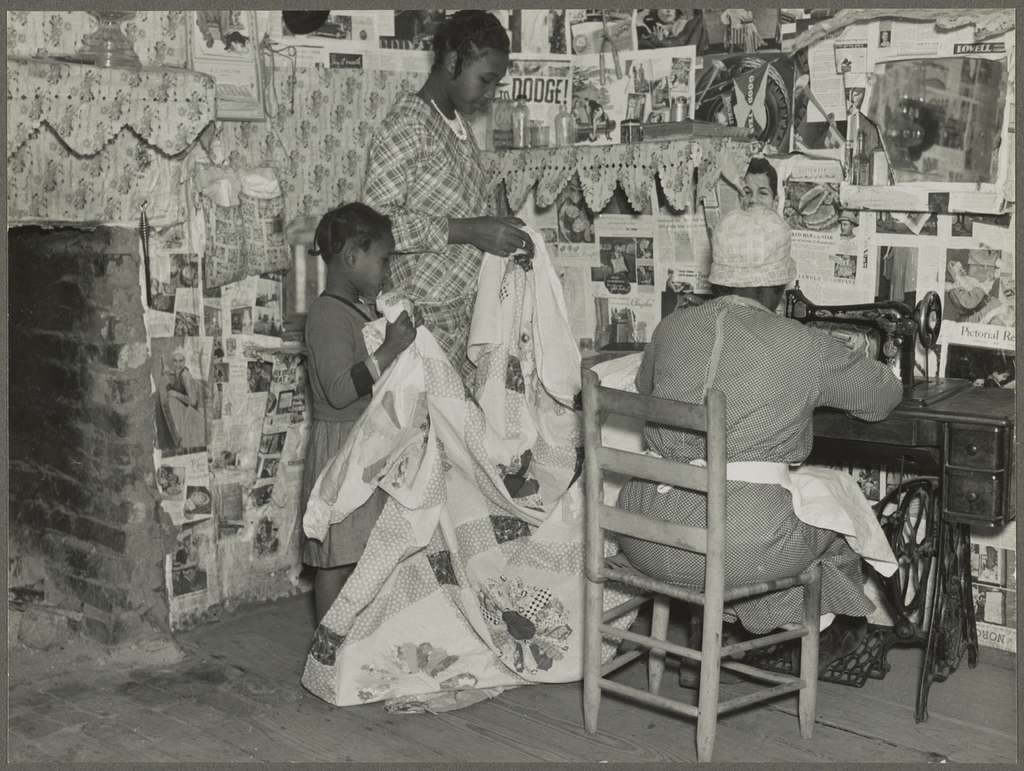
The image is attributed to Arthur Rothstein. It is housed at the Library of Congress within its Dust Bowl Photographs, 1936.
The image is believed to have been taken in Gees Bend, Alabama. It depicts an older Black woman sewing a quilt, while two young children stand by and observe.
No known restrictions. For information, see U.S. Farm Security Administration/Office of War Information Black & White Photographs http://www.loc.gov/rr/print/res/071_fsab.html